Join
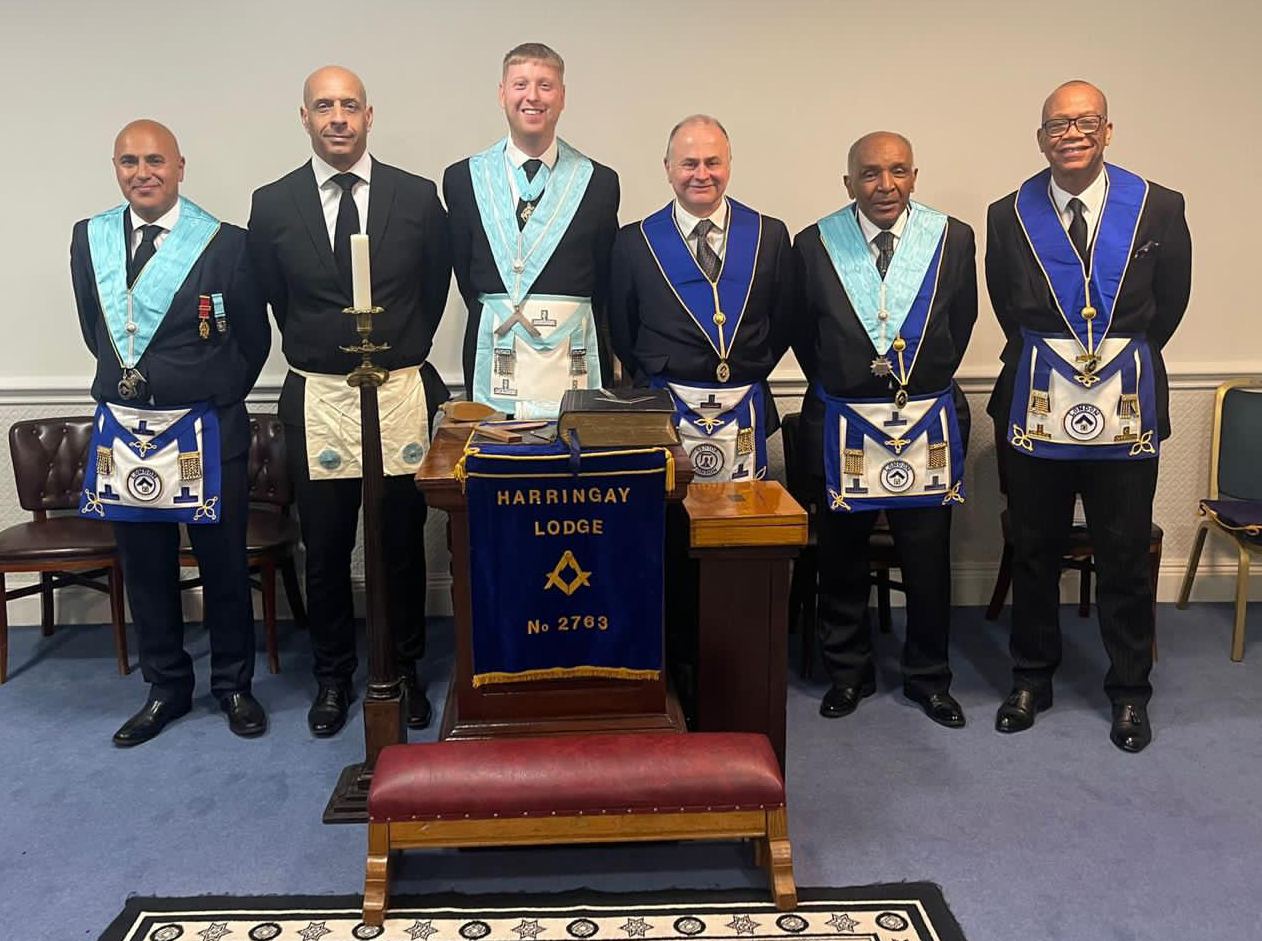
Joining Harringay Lodge
Thinking of becoming a Freemason?… Already a Mason?… Want to enjoy more by joining a Saturday Lodge?
Why join Harringay Lodge?
If you are interested in becoming a Freemason, we will be quite happy to talk to you about what is involved. Bear in mind that one of the requirements is a belief in God. It does not matter whether you are religious or not, the main thing is that you believe in God. Freemasonry is not a religion, it does not replace a person’s faith, but aims to reinforce what our own faiths teach. Irrespective of religious affiliations, Freemasons aim to work in love and harmony with each other and others – one might wish that many more people shared the same view these days.
Freemasonry has existed for many years and has its roots in the practices and skills of ancient stonemasons. It is often said that Freemasonry ‘makes good men better’ and this is the main aim. By practicing Freemasonry, men become better members of society, more charitable and more confident in themselves.
Freemasonry seeks to attract men from all backgrounds and walks of life, enabling them to develop into more thoughtful and confident people. To inspire and challenge them to practise the core values which we celebrate – Integrity, Friendship, Respect, Service – in their private and public lives. To cement our reputation as a force for good in our communities and in society at large.
On this page we give you five good reasons to join Harringay Lodge and answers to the most common questions about Freemasonry. If you wish to enquire further about becoming a member of Harringay Lodge, please get in touch via our Lodge Secretary.
Five good reasons to Join Harringay Lodge...
If you are a working man, you know the pressures of today’s working environment. It usually means, long hours and an expectation that you have to go the extra mile if you hope to progress in your career, doesn’t it? So, taking time off during your working day to attend a lodge meeting is either difficult or impossible. But it could simply be that you prefer a weekend meeting. If this is you, consider joining Harringay Lodge because it meets on four Saturdays a year.
A Saturday meeting means that for most sessions you can have a relaxed morning, go to your meeting in the evening and be sure of having a good time – which is guaranteed because Harringay Lodge is one of the friendliest lodges in London.
Currently, our December meeting is held during the late morning, so that for the festive season, we can meet, have lunch and head off to do some Christmas shopping… or anything else you fancy in the heart of London.
Our four meetings are held at Mark Masons’ Hall, which is a lovely venue with good quality dining. Mark Masons’ Hall also has a long masonic history and is the home of a branch of freemasonry know as Mark Masonry. To find out more about Mark Masons’ Hall, click here for the official website .
If you are interested in furthering your knowledge of Freemasonry and perhaps joining other orders, you will find Mark Masons’ Hall to be one of the few places where a large number of orders hold their meetings. So, you will have twelve different orders to choose from – and join, if you so wish.
St. James’s Palace is the official residence of the sovereign and is the most senior Royal Palace in the United Kingdom. Although the monarch no longer resides at the Palace, it is the residence of other members of the Royal Family.
It was originally commissioned by King Henry VIII and is not open for visitors, but is used mainly for receptions for heads of state or the charities of which members of the Royal Family are patrons.
It is known especially for its magnificent gatehouse.
Green Park is one of the eight Royal Parks in London. It is perfect for a stroll and has two main features: Canada Gate (see below) and Canada Memorial. You can also get a view of Buckingham Palace from the park.
The park does not have a lake, but it is more peaceful than some of the other Royal Parks. It has a range of tree species and common birds such as blackbirds and starlings as well as migrant birds.
There is a wonderful restaurant called ’86 St. James’ in the building, where you will be able to dine with your masonic or non-masonic friends and family there and enjoy great food and drinks.
The catering is excellent and meets the high standards expected by Freemasons in London, so you can be sure that you will get high quality dining if you decide to eat here.

Thinking of becoming a Freemason?… Already a Mason?… Want to enjoy more by joining a Saturday Lodge? You’ll be among friends at Harringay Lodge.
Answers to the most common questions about Freemasonry...
Freemasonry has a different meaning to each person who joins. For some people, it’s about finding and making new friends and acquaintances. For others it’s about being able to help others, whether it is for a deserving cause or to make a contribution to family and for society. For most, it is also an enjoyable hobby.
Freemasonry is one of the oldest and largest non-religious, non-political, fraternal and charitable organisations. It’s members gain insight and self-knowledge through participation in a series of ceremonies. Members are expected to be honest and of high moral standing and they are encouraged to speak openly about Freemasonry.
A Lodge meeting is like most business meetings. Like many business or groups, the meetings are open only to members and have two parts. Firstly, there are normal administrative procedures such as:
• Minutes of the previous meetings
• Proposing and balloting for new members
• Discussing and voting on the accounts
• Masonic news, literature and correspondence
• News about masonic and non-masonic charitable work
Secondly, there are the ceremonies performed for:
• Admitting and progressing new members
• The annual installation of the Master and Officers of the Lodge
The promises and oaths new members make concern their behaviour both in the Lodge and in society. In the same way that many organisations maintain confidentiality, members promise to keep confidential the way they recognise each in their own lodges or when visiting another Lodge. Freemasons also promise to support others in time of need as long as it does not conflict with their family, work or public obligations
Absolutely not. Every member who joins makes a declaration that they will not use their masonic membership for personal gain or advantage. Any member found to be doing so may have action taken against them.
Whilst there are Masonic charities that cater specifically, but not exclusively, for Masons or their dependants, others make significant grants to non-Masonic organisations.
All Freemasons are expected to have a religious belief, but Freemasonry does not seek to replace a Mason’s religion or provide a substitute for it. It deals in a man’s relationship with his fellow man not in a man’s relationship with his God.
There are elements within churches who misunderstand Freemasonry and its objectives. They confuse secular rituals with religious liturgy. There are many Masons in churches where their leaders have been openly critical of the organisation. Masonry has always actively encouraged its members to be active in their own religion.
Yes. Four Grand Masters of English Freemasonry have been Roman Catholics. Today there are many Roman Catholic Freemasons.
Freemasonry, as a body, will never express a view on politics or state policy. The discussion of politics at Masonic meetings has always been prohibited.
Freemasonry exists throughout the world. However, each Grand Lodge is sovereign and independent. There is no international governing body for Freemasonry.
Yes. Whilst UGLE, following the example of medieval stonemasons, is, and has always been, restricted to men, women Freemasons have two separate Grand Lodges, which are restricted to women.
Wearing regalia is historic and symbolic. Like a uniform, the regalia indicates the rank of the wearer in the organisation.
Metropolitan Grand Lodge
The core values of Freemasonry

Integrity

Friendship

Respect